
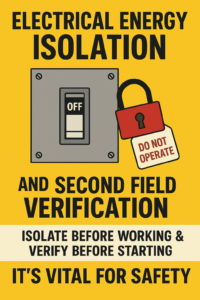
Electrical energy isolation is the process of completely removing electrical power from equipment before any maintenance, repair, or inspection work is carried out. This is usually done through Lockout/Tagout (LOTO) procedures, which ensure that switches, breakers, or isolators are locked in the OFF position to prevent accidental re-energization.
However, isolation alone is not enough—and that’s where Second Field Verification comes in.
What Is Second Field Verification?
Second Field Verification means that after isolating the equipment, a qualified person physically verifies again in the field that:
- The isolator is correctly switched OFF
- The equipment is truly de-energized
- No stored or residual electrical energy is present
- The work area is safe before starting the task
This verification is done using approved testing tools (like a voltmeter or tester) and follows a “test–prove–test” approach.
Why Is It Important?
Electrical energy is invisible and unforgiving errors can be fatal. Second Field Verification improves safety by:
- Preventing accidental electrocution due to incorrect isolation
- Catching human errors such as locking out the wrong breaker
- Eliminating assumptions—only measured, confirmed zero energy is reliable
- Reinforcing accountability, ensuring that two checks are done instead of one
- Protecting workers during high-risk tasks, especially in industrial settings
In Simple Terms:
Isolation makes the system safe,
Verification confirms it.
Together, they prevent injuries, fires, equipment damage, and fatal incidents.